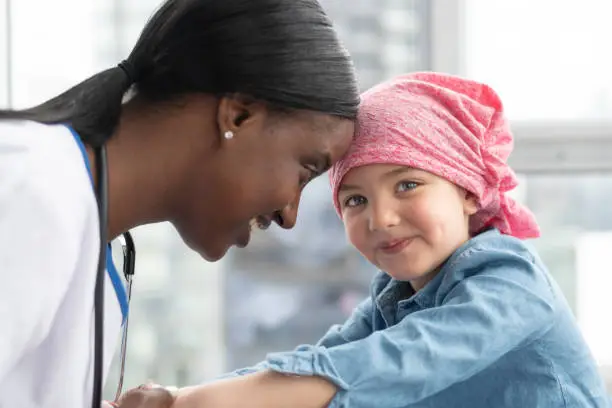
Growing up with a rare genetic disorder, Pam Kowalczyk often felt isolated and misunderstood, struggling with a condition that few people around her truly understood.
Phenylketonuria, known as PKU, affects how the body processes protein and requires constant monitoring, strict dietary limits and lifelong medical management.
Pam was diagnosed at birth and immediately placed on a carefully controlled low-protein diet, which allowed her to protect her cognitive development and live a full, independent life.
As she grew older, doctors warned Pam that pregnancy could pose serious risks because uncontrolled PKU during pregnancy can severely harm a developing baby.
Faced with those realities, Pam made the difficult but determined decision that adoption would be the safest and most responsible way for her to become a parent.
Rather than shy away from challenges, she felt drawn to adopting a child with PKU or another disability she knew she could understand and support.
In 2016, while attending a PKU conference, Pam learned about children around the world waiting for adoption who shared her condition.
When she saw a photo of Kelsey, a young girl living with PKU, Pam felt an instant emotional connection and knew she had found her daughter.
Kelsey had been abandoned as a baby, with a note explaining that she had PKU and needed someone who could care for her medical needs.
Pam trusted her experience and medical knowledge and moved forward with the adoption process, believing she could give Kelsey the life she deserved.
They met for the first time on July 31, 2017, the day the adoption was finalized, and Pam immediately sensed something was wrong.
Kelsey struggled to walk, was completely non-verbal and showed signs of significant developmental delays that concerned Pam deeply.
Medical evaluations later confirmed that Kelsey had suffered irreversible brain damage due to untreated PKU during infancy.
Although Kelsey's form of PKU is genetically milder than Pam's, the lack of early treatment drastically changed the course of her development.
Today, Kelsey is 12 years old, but cognitively functions closer to a much younger child and requires daily support.
She uses assistive communication devices, attends speech and occupational therapy, and has learned sign language to help express herself.
Pam manages behavioral challenges with patience, understanding that frustration often comes from Kelsey's difficulty communicating her needs.
Together, mother and daughter closely monitor their blood levels and carefully track everything they eat to keep their condition under control.
Pam follows an extremely restrictive diet, often relying on medical formula and eating very little solid food throughout the day.
Kelsey, whose condition allows for more flexibility, enjoys a wider range of carefully selected foods.
Despite the daily challenges, their shared condition has created a deep bond built on empathy, strength and mutual understanding.
Medical experts say that growing up with a parent who shares the same condition provides Kelsey with an invaluable built-in support system.
Pam believes their journey together proves that shared hardship can also create powerful connection and resilience.
She often reminds her daughter that no matter how difficult life becomes, they are capable of facing it together.